Why Choose Pv Battery Storage for Your Energy Needs?
The demand for renewable energy solutions is rising rapidly. A recent report by the International Energy Agency (IEA) indicates that global solar energy capacity could reach 4,800 gigawatts by 2030. This surge highlights the potential of photovoltaic (PV) systems. To maximize the benefits of solar energy, many consumers are turning to PV Battery Storage.
PV Battery Storage systems play a critical role in energy management. According to a study by the National Renewable Energy Laboratory (NREL), energy storage can reduce reliance on the grid by up to 80%. This capability offers energy security and enhances energy independence. However, selecting the right storage solution can be complex, given the variety of options available.
The advantages of PV Battery Storage include cost savings and environmental benefits. By storing excess solar energy, homeowners can utilize it during peak demand hours. Despite the clear benefits, some challenges remain. Issues like battery lifespan and recycling need careful consideration. As the industry evolves, ongoing innovation will be essential for addressing these concerns and enhancing the effectiveness of PV Battery Storage.
Understanding the Basics of PV Battery Storage Systems
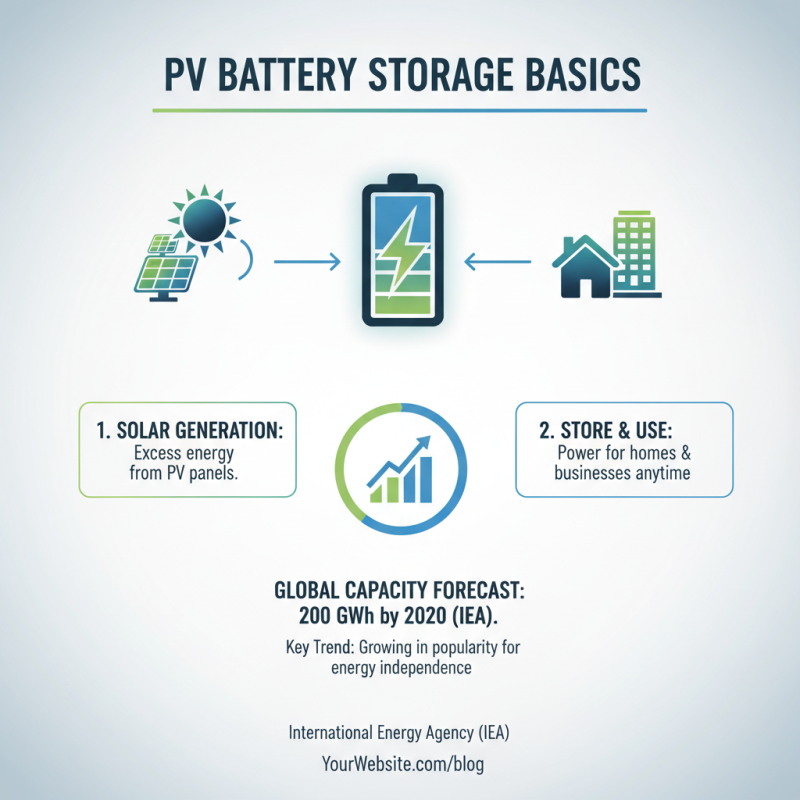
Photovoltaic (PV) battery storage systems are becoming popular among homeowners and businesses. They store excess energy generated by solar panels for later use. According to the International Energy Agency, global capacity for battery energy storage is expected to reach 200 gigawatt-hours by 2030. This increase reflects a growing interest in renewable energy solutions.
Understanding the basics of PV battery storage is essential. A typical system includes solar panels, an inverter, and a battery bank. These components work together to provide reliable energy when sunlight is unavailable. The efficiency of battery storage systems can vary significantly, often between 70% to 90%. Choosing the right system becomes crucial for optimizing investment.
Tips: Always consider system size. An oversized system can lead to unnecessary expenses. Monitoring your energy consumption helps determine your ideal storage capacity. Doing so makes the system more efficient and cost-effective. Regularly checking battery health can prevent unexpected failures in the system. Even with advanced technology, no system is perfect, and issues might arise unexpectedly.
Benefits of PV Battery Storage for Homeowners and Businesses
As solar energy becomes increasingly popular, PV battery storage offers substantial benefits for homeowners and businesses alike. According to a report by the National Renewable Energy Laboratory, the integration of battery storage can enhance solar self-consumption by up to 90%. This means that users can rely more on their generated energy, reducing dependence on grid power and lowering electric bills.
Battery storage systems can store excess energy produced during sunny days for use in the evening or during cloudy weather. This capability improves energy management and increases efficiency. Businesses, for example, can find value in reducing peak demand charges. Data shows that commercial users can save up to 30% on electricity costs by using stored energy during peak hours.
Yet, there are challenges to consider with PV battery systems. Installation costs can be significant upfront, despite long-term savings. Additionally, the lifecycle and capacity of batteries may vary, leading to questions about durability and reliability. Homeowners must weigh these factors against potential savings to make informed decisions. Understanding usage patterns and energy needs can help guide more effective investments in battery storage solutions.
Comparing PV Battery Storage to Traditional Energy Sources
When comparing PV battery storage to traditional energy sources, several key differences emerge. Traditional energy sources rely heavily on fossil fuels, which are finite and contribute to pollution. In contrast, solar energy harnesses sunlight, a renewable resource. This shift promotes a cleaner environment and reduces dependency on non-renewable resources.
PV battery storage allows homeowners to store excess solar energy for later use. This capability creates energy independence and enhances reliability during outages. Traditional energy sources often undergo price fluctuations based on market changes. Solar energy, combined with battery storage, provides a more stable option for budgeting energy expenses.
Many still question the efficiency and cost-effectiveness of PV battery systems. Initial investments can be intimidating. Yet, the long-term savings and environmental benefits may outweigh these concerns. Users need to reflect on their energy usage patterns and needs. Is immediate cost the only factor? Analyzing the bigger picture is essential. Investing in PV battery storage could change the energy landscape for many. It’s worth considering.
Factors to Consider When Choosing a PV Battery Storage System
When selecting a PV battery storage system, several factors warrant careful consideration.
Battery capacity is crucial. It determines how much energy you can store for use later. A larger capacity may seem favorable, but it can lead to higher costs and unnecessary waste if not matched to your energy needs.
Another important aspect is the battery's lifespan. Most batteries degrade over time, which affects efficiency. You want a system that balances lifespan and capacity.
Look for warranties that reflect the manufacturer’s confidence in their product. Factors like temperature sensitivity and operating conditions can also influence a battery’s performance.
Installation and maintenance are often overlooked. Complex systems may incur higher installation costs and require specialized services. Regular maintenance is essential for optimal performance, yet many users are unaware.
Reflect on your ability to manage upkeep long-term. Understanding these aspects can lead to a more informed decision, ensuring the battery storage system meets your unique energy needs efficiently.
Future Trends in PV Battery Technology and Energy Storage Solutions
As the demand for renewable energy solutions grows, the future of PV battery technology looks promising. According to a report by the International Energy Agency, global battery storage capacity is expected to reach 125 gigawatts by 2024. This surge is driven by advancements in lithium-ion technology, which continues to dominate the market due to its efficiency and decreasing costs. A recent study suggests that prices for lithium-ion batteries declined by nearly 90% in the past decade, making them more accessible for consumers and businesses alike.
Innovations, such as solid-state batteries, are on the horizon. These batteries promise greater energy density and enhanced safety features. The U.S. Department of Energy predicts that solid-state batteries could provide double the energy storage capacity compared to traditional lithium-ion batteries. However, challenges remain in manufacturing scalability and materials sourcing. The transition to these next-generation batteries will need careful consideration.
Tips: When selecting a PV battery storage solution, assess your energy needs accurately. Consider factors like initial costs, expected lifespan, and discharge rates. It’s essential to analyze whether current technologies meet your long-term sustainability goals. Staying informed on evolving trends will allow you to make educated decisions that align with your energy requirements.