Top Commercial Battery Storage Solutions in China for Global Buyers?
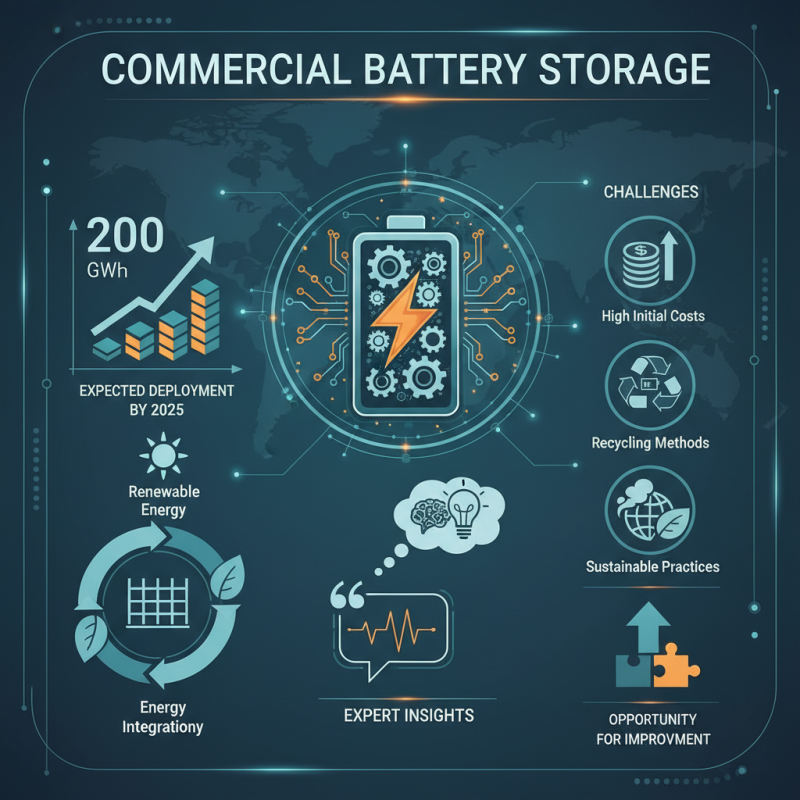
The landscape of Commercial Battery Storage in China is evolving rapidly, attracting global buyers seeking innovative solutions. According to a recent report by Wood Mackenzie, the deployment of battery storage systems in China is expected to exceed 200 GWh by 2025. This growth speaks volumes about the country's commitment to renewable energy integration and energy efficiency.
Experts in the field emphasize the importance of innovation in this sector. Dr. Li Wei, a leading authority in energy storage research, stated, "The future of energy depends significantly on the advancement of Commercial Battery Storage technologies." His insights highlight the critical role of these systems in stabilizing energy grids and supporting the transition towards sustainable energy sources.
However, challenges remain. The market is facing issues like high initial costs and the need for better recycling methods for used batteries. Moreover, as the demand for energy continues to rise, there's an urgent need to reflect on sustainable practices within the industry. The opportunity for improvement is immense, and understanding these dynamics is essential for global buyers navigating the Chinese battery storage market.
Overview of Commercial Battery Storage Market in China
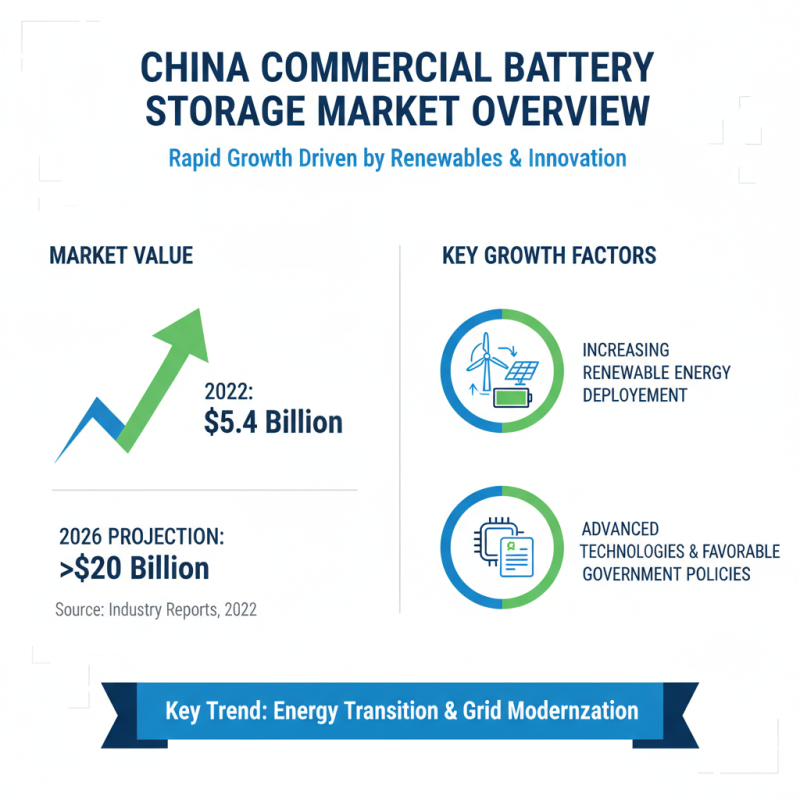
China's commercial battery storage market has experienced rapid growth in recent years. As of 2022, the market was valued at approximately $5.4 billion, with projections to surpass $20 billion by 2026, driven by increasing renewable energy deployment. Advanced technologies and favorable government policies are two key factors behind this expansion.
Diverse applications are emerging in various sectors, including renewable energy integration, grid stabilization, and demand response. According to recent studies, around 30% of new energy sources in China are now coupled with energy storage systems. These systems enhance energy reliability and efficiency. Moreover, China's commitment to reaching carbon neutrality by 2060 is expected to further boost investments in battery storage solutions.
However, challenges persist in the commercialization process. Many companies struggle with performance issues and scaling production. Additionally, the recycling of batteries presents a significant environmental concern. Addressing these hurdles is crucial for sustainable growth. As this market matures, collaboration between policymakers, industry experts, and researchers will be essential for overcoming obstacles and maximizing the benefits of battery storage technologies.
Key Players in China's Battery Storage Industry
China’s battery storage industry is rapidly evolving. Many companies offer innovative solutions. These solutions cater to both domestic and international markets. Several key players stand out, demonstrating significant expertise and influence in the field. They provide essential services, backing their technology with vast research and development efforts.
Tips: Always assess the technological advancements of each player. Not all companies update their products regularly. Choose providers that prioritize innovation.
Beyond technology, partnerships play a crucial role. Some companies collaborate with universities. Others engage with local governments, strengthening their market position. This networking enhances their credibility and helps them navigate regulatory landscapes.
Tips: Investigate the partnerships of potential suppliers. A strong network can indicate reliability and innovation capacity. Don't overlook the importance of collaboration in this industry.
Quality assurance mechanisms are vital in China’s market. Many players focus heavily on quality control processes. However, inconsistency can still occur due to rapid market changes. Buyers must remain vigilant and conduct thorough assessments.
Tips: Look for companies with third-party certifications. This adds a layer of assurance regarding product quality. Avoid relying solely on self-reported metrics.
Innovative Technologies Driving Battery Storage Solutions
Innovative technologies in battery storage solutions are transforming energy management in China. Advanced lithium-ion batteries have improved energy density significantly. This innovation allows for larger capacity storage in smaller spaces. Emerging materials, like solid-state batteries, promise to enhance safety and longevity.
China's efforts in smart grid technology are noteworthy. These systems use data analytics for efficient energy use. They can predict demands and optimize resources accordingly. Energy storage systems are now integrated with AI for real-time monitoring. While these advancements are exciting, questions remain about scalability.
Recycling and sustainability are areas needing attention. The environmental impact of battery production is concerning. Efforts are being made to improve the lifecycle of these products. However, challenges such as cost and technology adoption still exist. Continued focus on innovation will be essential for future developments.
Top Commercial Battery Storage Solutions in China for Global Buyers
| Storage Capacity (MWh) |
Cycle Life (Cycles) |
Efficiency (%) |
Charging Time (Hours) |
Discharging Time (Hours) |
| 10 |
5000 |
90 |
1.5 |
1.2 |
| 15 |
6000 |
92 |
2 |
1.5 |
| 20 |
8000 |
95 |
2.5 |
2 |
| 25 |
7000 |
89 |
3 |
2.5 |
| 30 |
8500 |
93 |
3.5 |
3 |
Regulatory Environment Impacting Battery Storage in China
The regulatory environment in China significantly influences the battery storage market. Policies have evolved to support renewable energy integration. In 2020, new guidelines encouraged investment in battery storage solutions. This propelled many companies to explore options in this growing sector.
However, regulatory challenges remain. Compliance with local laws can be daunting. Some businesses struggle to navigate permits and approvals. This often leads to delays in project completion. Companies should invest in understanding these regulations thoroughly.
Tip: Regularly review updates on energy policies. Staying informed can help companies adapt quickly.
Moreover, regional differences in regulations exist. Urban areas might face stricter compliance than rural ones. This inconsistency can affect planning and operational strategies. Firms should consider collaboration with local experts to mitigate risks.
Tip: Engage with regional authorities early in project planning. Building relationships can lead to smoother processes.
Investors need to remain cautious. Rapid changes in regulations can impact long-term strategies. Understanding these dynamics is crucial for success.
Market Trends and Future Prospects for Global Buyers
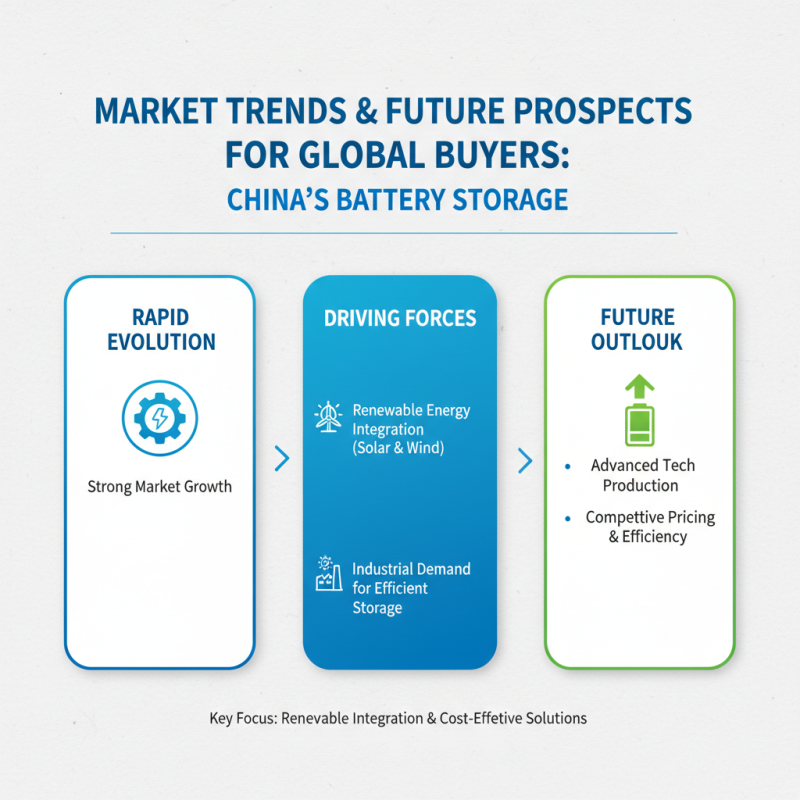
The battery storage market in China is rapidly evolving. Recent trends indicate a strong demand from various industries, especially for renewable energy integration. Companies seek efficient solutions to store excess power generated from solar and wind sources. This demand is shaping the production of advanced storage technologies, contributing to competitive pricing and improved efficiency.
As global buyers evaluate their options, understanding the regulatory landscape is crucial. Policies supporting renewable energy projects in China are continuously changing. Buyers must stay informed about local incentives and subsidies that may influence investment. Additionally, there is an increasing focus on sustainable practices, including the lifecycle of battery materials. This trend presents both opportunities and challenges for manufacturers and buyers alike.
Future prospects look promising, yet complexities remain. Buyers should consider regional market dynamics, technological advancements, and supply chain dependencies. Balancing cost-effectiveness with reliability is becoming a pressing issue. Engaging with local experts can provide invaluable insights, ensuring informed decisions are made. However, fluctuations in raw material availability can lead to unpredictability, warranting careful planning for procurement strategies.