China Top 10 Home Solar Battery System Suppliers

China has become a major force in residential energy storage, supported by its extensive battery manufacturing base and competitive solar supply chain. The International Energy Agency’s Batteries and Secure Energy Transitions report states that global energy storage capacity must increase sixfold by 2030 under the net-zero pathway. This expansion places greater attention on dependable Home Solar Battery System suppliers.

China’s manufacturers offer lithium iron phosphate batteries, modular cabinets, hybrid inverters, and cloud-based monitoring platforms. However, product quality varies. A low purchase price may hide limited warranty support, unclear usable capacity, or weak after-sales service. This guide examines China’s top 10 Home Solar Battery System suppliers through practical criteria, including battery chemistry, round-trip efficiency, cycle life, thermal protection, certifications, and international support. These details matter when a battery operates beside a family home, often through hot summers and overnight power demand.

The ranking also considers published company information, technical documentation, and market evidence from recognized energy reports. IEA data provides the broader storage outlook, while reports from BloombergNEF and SolarPower Europe help explain battery pricing, deployment, and market competition. No ranking is perfect. Supplier performance can differ by region, installer, and model year. A strong brand may still deliver an uneven project if system design is careless. Therefore, readers should verify datasheets, warranty terms, local certification, and service response before choosing a supplier. Ten names follow, but the safest choice depends on the complete system—not the battery label alone.

China Top 10 Home Solar Battery System Suppliers

What Is a Home Solar Battery System?

A home solar battery system stores electricity generated by rooftop solar panels for later use. It usually includes solar panels, an inverter, a battery pack, a battery management system, and protective switches. The inverter changes solar power into usable household electricity. It also manages charging and discharging. During the evening, stored energy can run lights, refrigerators, routers, and other essential appliances.

In practical use, system size matters more than impressive advertising numbers. A family using 12 kilowatt-hours daily may need a different battery from a small apartment. Battery capacity shows stored energy, while power rating shows how much electricity the system can deliver at once. These are not the same.

A qualified installer should check roof output, local weather, wiring, backup circuits, and household load patterns before recommending equipment. Safety certifications and clear warranty terms also deserve careful review.

A reliable system should include temperature monitoring, overcharge protection, and emergency shutdown functions. A mobile app can display energy flow, but a polished interface does not prove good engineering. That is easy to forget. Some systems perform well in summer but lose efficiency during cold weather or extended cloudy periods. Users should inspect installation records and maintenance support, not only battery price. Even a well-designed system may need occasional firmware updates, connection checks, or capacity testing. Performance is never perfectly constant.
How China’s Solar Battery Suppliers Design and Manufacture Their Systems

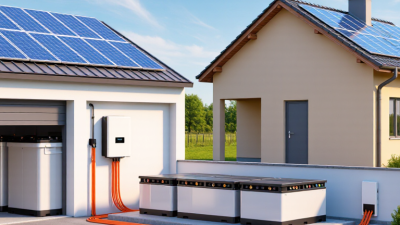
China’s leading home solar battery suppliers design systems around safety, usable capacity, and installation conditions. Engineers usually begin with household load data, roof generation, and local grid behavior. A 10 kWh battery does not always provide 10 kWh for daily use. Reserve limits, inverter losses, and temperature affect actual output. Good suppliers explain these limits clearly.

Manufacturing starts with tested lithium cells, controlled assembly, and battery management software. Workers match cells by voltage and capacity before placing them into modules. Automated welding can improve consistency, while manual inspection checks cables, insulation, seals, and connector alignment. Each finished unit should pass charge, discharge, thermal, communication, and protection tests. Traceable serial records also help technicians identify weak batches. Small details matter.

The strongest suppliers simulate harsh household conditions before shipment. They test high humidity, repeated cycling, sudden load changes, and low-temperature charging. Enclosures often require suitable ingress protection for garages or utility rooms. Yet no factory is flawless. A rushed inspection can miss a loose terminal or a software fault. Buyers should review test reports, warranty terms, installation training, and replacement procedures. Clear documentation is often more valuable than attractive specifications.

China’s Residential Solar Battery System Design Benchmarks

The chart summarizes commonly published design benchmarks for residential lithium iron phosphate (LFP) solar battery systems manufactured in China. Typical systems use modular capacities, high depth of discharge, approximately 90% round-trip efficiency, and around 10 years of warranty coverage. Values are reference benchmarks rather than company-specific specifications.

Key Technologies Used in Residential Solar Energy Storage

China Top 10 Home Solar Battery System Suppliers

Key Technologies Used in Residential Solar Energy Storage

Residential solar storage depends on more than battery capacity. Leading Chinese suppliers commonly use lithium iron phosphate cells, known for strong thermal stability and long cycle life. A battery management system monitors voltage, temperature, and charging balance. This protection works quietly, but it determines daily safety and usable capacity.

Hybrid inverters connect solar panels, batteries, household loads, and the utility grid. Modern models use maximum power point tracking to improve energy collection during changing sunlight. An energy management system then prioritizes solar power, battery charging, or evening consumption. In practical installations, communication quality matters. A technically advanced battery can still perform poorly with weak monitoring software.

Tips: Check round-trip efficiency, continuous output, warranty conditions, and installation support. Ask whether the system supports backup loads during outages. Confirm its operating temperature range, enclosure rating, and remote fault alerts. Do not judge a supplier by capacity alone. Bigger is not always better.

Homeowners should also examine battery chemistry, inverter compatibility, and expansion limits before purchasing. Professional load calculations can prevent costly oversizing. No system is perfect. Weather, aging, and user habits still reduce real-world output. Independent testing, clear documentation, and responsive technical service provide stronger evidence than promotional claims. A reliable supplier explains these limitations openly and helps users choose a system suited to their roof, climate, and daily electricity pattern.

China Top 10 Home Solar Battery System Suppliers - Key Technologies Used in Residential Solar Energy Storage

No. Supplier System Category Battery Chemistry Typical Usable Capacity Typical Continuous Power System Voltage Architecture Round-Trip Efficiency Key Technologies Used Safety and Protection Features Common Residential Application
1 Modular Low-Voltage ESS Lithium iron phosphate (LFP) 5–20 kWh 3–10 kW 48–51.2 V DC Approximately 90–95% Stackable battery modules, integrated battery management system (BMS), CAN/RS485 communication, and automatic module recognition. Cell-level voltage and temperature monitoring, overcharge protection, short-circuit protection, thermal monitoring, and circuit breakers. Self-consumption improvement, backup power, and small residential photovoltaic systems.
2 High-Voltage DC-Coupled ESS Lithium iron phosphate (LFP) 5–30 kWh 5–15 kW 150–600 V DC Approximately 92–97% High-voltage battery strings, DC-coupled architecture, distributed BMS, and direct coordination with hybrid solar inverters. Pre-charge control, insulation resistance detection, high-voltage interlock, contactor monitoring, and thermal runaway mitigation. New-build homes requiring efficient solar charging and reduced conversion losses.
3 All-in-One Hybrid Storage System Lithium iron phosphate (LFP) 5–25 kWh 3–12 kW Low- or high-voltage DC bus Approximately 90–96% Battery pack, hybrid inverter, energy management system, and backup transfer equipment integrated into one enclosure. Integrated DC and AC surge protection, residual-current monitoring, temperature sensors, and emergency shutdown functions. Space-constrained homes seeking simplified installation and coordinated solar-plus-storage control.
4 AC-Coupled Retrofit ESS Lithium iron phosphate (LFP) 5–30 kWh 3–10 kW Battery DC with 230 V or 120 V AC output Approximately 85–93% Bidirectional battery inverter, AC coupling, independent photovoltaic inverter compatibility, and automated load management. AC overcurrent protection, anti-islanding protection, ground-fault monitoring, and battery-side BMS protection. Adding storage to existing rooftop solar installations without replacing the original PV inverter.
5 Outdoor Integrated ESS Lithium iron phosphate (LFP) 10–40 kWh 5–20 kW High-voltage or low-voltage DC Approximately 90–96% Weather-resistant enclosure, liquid or forced-air thermal management, integrated inverter, and remote operating software. Ingress protection commonly rated IP54 or higher, smoke and temperature detection, fire-resistant housing, and overcurrent protection. Outdoor installation, larger villas, home offices, and properties with limited indoor equipment space.
6 Backup-Focused Residential ESS Lithium iron phosphate (LFP) 10–30 kWh 5–15 kW 48 V DC or high-voltage DC Approximately 88–95% Uninterruptible power transfer, backup-load prioritization, black-start capability, and generator integration. Fast transfer control, islanding detection, thermal protection, battery isolation, and dedicated essential-load circuit protection. Homes exposed to grid outages that require continuous power for refrigerators, communications, pumps, or medical equipment.
7 Smart Energy Management ESS Lithium iron phosphate (LFP) 5–25 kWh 3–15 kW Low- or high-voltage DC Approximately 90–97% Cloud-connected energy management, time-of-use scheduling, weather-based forecasting, demand response, and mobile monitoring. Remote alarms, event logging, firmware controls, BMS diagnostics, and automatic fault isolation. Tariff optimization, peak-load reduction, and households with variable electricity prices.
8 Scalable Multi-Module ESS Lithium iron phosphate (LFP) 10–100 kWh 5–30 kW Modular low- or high-voltage DC Approximately 90–96% Parallel battery cabinets, modular power conversion, automatic balancing, and capacity expansion without replacing the complete system. Module-level fuses, contactor control, temperature balancing, insulation monitoring, and coordinated shutdown logic. Large homes, multi-family residences, and installations with future load-growth requirements.
9 Three-Phase Residential ESS Lithium iron phosphate (LFP) 10–50 kWh 5–30 kW High-voltage DC with three-phase AC output Approximately 90–96% Three-phase hybrid inverter, phase balancing, load measurement, export limitation, and coordinated battery dispatch. Anti-islanding protection, phase monitoring, surge protection, residual-current protection, and over-temperature shutdown. Large residential properties, homes with three-phase appliances, and rural properties with high peak demand.
10 Solar-Plus-Storage Microgrid ESS Lithium iron phosphate (LFP) 20–100 kWh 10–50 kW High-voltage DC with AC microgrid output Approximately 88–95% Microgrid controller, automatic islanding, photovoltaic curtailment, generator coordination, and priority-based load shedding. Grid-forming control, synchronized reconnection, fire detection, emergency stop, and coordinated AC/DC protection. Remote homes, estates, agricultural residences, and properties requiring extended off-grid operation.

Note: The specifications above represent typical technical ranges and commonly used technologies in China-manufactured residential solar energy storage systems. Actual values vary by system configuration, installation environment, inverter model, operating temperature, and applicable regional standards.

China’s Top 10 Home Solar Battery System Suppliers

China’s Top 10 Home Solar Battery System Suppliers are often assessed through more than production volume. A reliable supplier should show documented safety testing, stable cell sourcing, and clear system specifications. Important details include usable capacity, cycle performance, thermal control, inverter compatibility, and installation guidance. These points reveal whether a battery can support a family’s evening loads, not just perform well in a brochure.

A practical comparison should also examine warranty terms, remote monitoring, replacement procedures, and technical support. Suppliers with strong engineering teams usually provide load calculations, wiring diagrams, and commissioning instructions. Factory audits can verify assembly quality and quality-control processes. Independent test reports add confidence, especially for lithium-based storage systems used inside homes. Small details matter, such as enclosure ratings and battery management system protection.

No ranking is perfect. Public information may be incomplete, and advertised cycle numbers can depend on operating conditions. A supplier may offer excellent hardware but weak local service. Another may provide helpful support but limited customization. Buyers should request recent test documents, realistic warranty conditions, and references from comparable residential projects. The best choice depends on climate, household consumption, backup expectations, and local electrical requirements. A careful assessment is sometimes slower, but it reduces expensive surprises.

How to Evaluate and Select a Reliable Supplier

China Top 10 Home Solar Battery System Suppliers

How to Evaluate and Select a Reliable Supplier

China’s home battery market is expanding quickly. The IEA reported nearly 42 GW of global battery storage additions in 2023, almost triple the previous year. This growth creates opportunity, but quality varies. A reliable supplier should provide clear cell specifications, usable capacity, round-trip efficiency, and tested cycle life. Ask for independent reports covering IEC 62619, IEC 62109, and UN 38.3 requirements. Certification alone is not enough.

Review the supplier’s factory records and field experience. Request serial-number traceability, documented failure rates, and installation references from similar climates. A serious manufacturer should explain battery management settings, low-temperature protection, inverter compatibility, and software updates. Warranty wording also deserves careful reading. Check whether it covers capacity retention, labor, shipping, and replacement procedures. BloombergNEF reported average lithium-ion pack prices at about 115 dollars per kWh in 2024, but a lower quotation may hide weaker cells or limited service.

Tips: Request a sample unit before signing a large order. Test it for several weeks. Compare measured capacity with the datasheet. Ask who handles a failed unit after installation. I have seen attractive specifications create difficult claims later. That possibility should shape the evaluation. Also check response times, spare-parts availability, and training for local installers. A dependable supplier is not always the cheapest one.