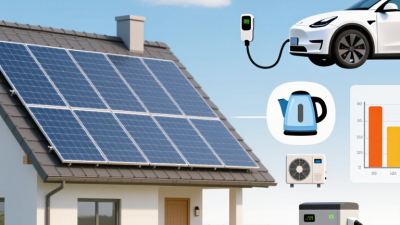
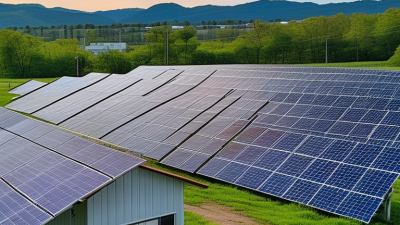
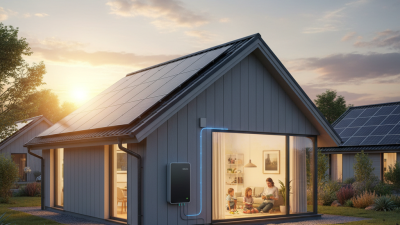
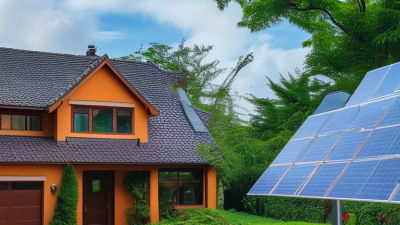
Choosing the best Solar Battery Storage System is not about buying the largest battery. It is about matching storage capacity, power output, chemistry, safety, and daily energy use. A family may need a different design than a farm, workshop, or small commercial building.
Elon Musk once said, “The sun doesn’t shine at night, and it doesn’t shine as much in winter.” That simple observation explains the purpose of battery storage. Solar panels produce power during daylight, while batteries shift part of that energy into evening hours. However, the right system depends on more than sunlight. It also depends on local weather, electricity tariffs, backup expectations, roof size, and installation quality.
This guide examines lithium iron phosphate batteries, hybrid inverters, usable capacity, round-trip efficiency, warranty terms, and emergency backup performance. It also considers practical details, such as whether the battery can fit beside a garage wall and operate safely during a summer heatwave. Manufacturer claims require careful checking. A high efficiency percentage may look impressive, yet poor installation can reduce real-world results.
There is no perfect system.
An experienced installer should review household load data, not guess from monthly bills alone. Readers should also compare independent certifications, service support, degradation guarantees, and replacement costs. These details often matter more than a low purchase price. The discussion may still have limits, because prices and technologies change quickly. A careful decision remains possible when performance claims are tested against actual operating conditions.
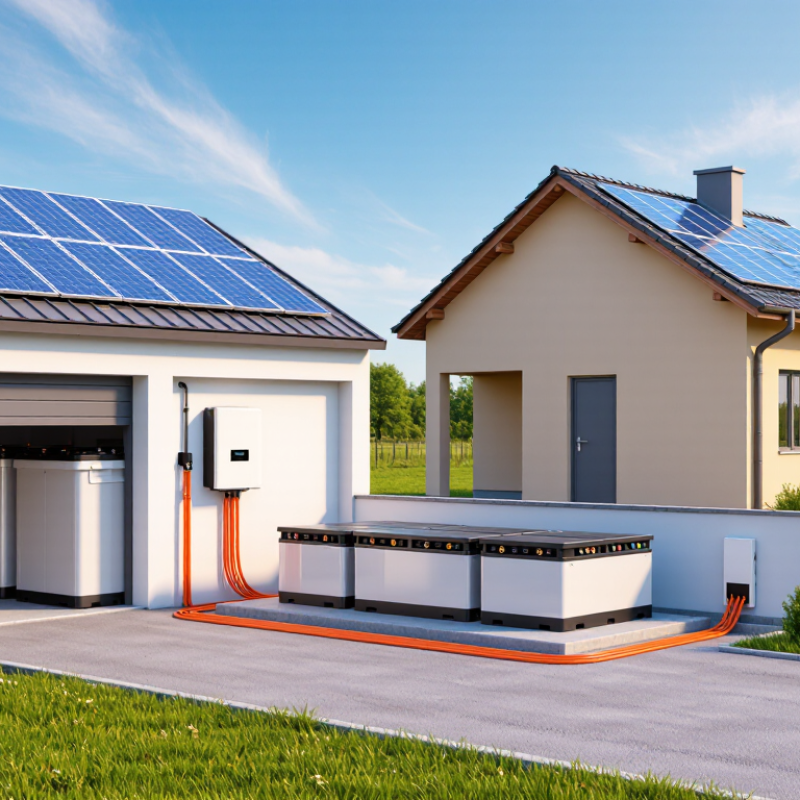
China’s solar battery storage landscape is broad, fast-moving, and highly competitive. Manufacturing centers support cells, inverters, battery cabinets, and energy management software. This integrated supply chain can reduce costs and shorten delivery times. Yet low prices do not automatically indicate dependable storage.
Most residential and commercial systems use lithium iron phosphate batteries. They offer strong thermal stability, long cycle life, and useful daily performance. A practical system may include a 5–15 kWh battery, rooftop panels, a hybrid inverter, and a monitoring gateway. The correct capacity depends on evening demand, backup priorities, roof output, and local electricity prices. The details matter.
Professional evaluation should examine cell consistency, battery management protection, inverter compatibility, enclosure ratings, and service response. Test reports should identify operating temperatures, usable capacity, round-trip efficiency, and warranty conditions. Climate changes everything. A coastal installation may need better corrosion protection, while a cold northern site may require battery heating. Export projects also face different grid codes and certification requirements.
A common mistake is comparing only storage capacity. Power output can matter more during motor starts or short outages. Another weakness is assuming laboratory cycle figures match every household. They do not. Installation quality, charging habits, ventilation, and software settings influence actual results. I would not call one configuration universally best. A reliable choice balances safety, verified performance, maintainability, and the user’s real load profile.
| System Segment | Typical Application | Common Battery Chemistry | Typical System Size | Typical Storage Duration | Round-Trip Efficiency | Expected Cycle Life | Key Strengths | Main Selection Considerations |
|---|---|---|---|---|---|---|---|---|
| Residential Solar Storage | Homes with rooftop photovoltaic systems, backup power needs, and time-of-use electricity pricing | Lithium iron phosphate (LFP) | 5–30 kWh per household; 3–15 kW inverter capacity | 2–6 hours | Approximately 85%–95% | About 4,000–8,000 cycles under suitable operating conditions | High safety, modular expansion, quiet operation, and improved self-consumption of solar power | Usable capacity, backup-load compatibility, operating temperature, installation space, warranty terms, and grid-connection requirements |
| Small Commercial and Industrial Storage | Factories, shops, offices, farms, charging facilities, and small commercial buildings | LFP; liquid-cooled configurations are increasingly used at larger power ratings | 100 kWh–5 MWh; approximately 50 kW–2 MW power capacity | 2–4 hours | Approximately 85%–93% | About 5,000–10,000 cycles, depending on depth of discharge and thermal management | Peak-demand reduction, solar energy shifting, load management, and potential participation in demand-response programs | Demand-charge structure, fire protection, power quality, availability, maintenance access, and local electricity-market rules |
| Utility-Scale Solar-plus-Storage | Large photovoltaic bases, renewable-energy integration, grid balancing, and peak-period energy shifting | LFP is widely used because of its safety and cycle-life characteristics | 10–500+ MWh; typically 1–4 hours of rated discharge duration | 1–4 hours, with longer-duration projects also possible | Approximately 80%–92% at system level | About 6,000–10,000 cycles for systems designed for frequent operation | Fast response, scalable containerized architecture, renewable curtailment reduction, and grid-support capability | Interconnection capacity, land use, auxiliary consumption, fire-safety design, degradation modeling, dispatch rules, and revenue certainty |
| Long-Duration Storage | Multi-hour renewable-energy shifting, evening peak supply, and extended grid-support applications | LFP for many battery-based systems; flow batteries and other technologies may be considered for specific duty cycles | Usually above 10 MWh; commonly 4–12+ hours of duration | 4–12+ hours | Approximately 60%–90%, depending on technology | Technology-dependent; flow batteries can support very high cycle counts, while lithium systems depend on operating conditions | Better alignment with extended renewable shortages and longer discharge requirements | Higher initial investment, lower power-to-energy ratio, project economics, footprint, and technology-specific maintenance requirements |
| DC-Coupled Solar Storage | New solar plants where battery charging occurs on the photovoltaic DC side before inverter conversion | Usually LFP | From several hundred kWh to hundreds of MWh | 1–4 hours in common solar applications | Potentially higher solar capture during clipping periods because some conversion stages can be avoided | Generally comparable to the selected battery system | Efficient solar oversizing, reduced inverter duplication in some designs, and improved use of surplus PV generation | More complex design, battery-management integration, operating flexibility, and compatibility between PV, battery, and power-conversion equipment |
| AC-Coupled Solar Storage | Adding storage to an existing photovoltaic plant or using independently dispatchable battery equipment | Usually LFP | From several kWh for homes to hundreds of MWh for grid projects | 1–4 hours in common applications | Approximately 80%–92% | Generally comparable to the selected battery system | Flexible retrofit capability, independent battery operation, and simpler separation of PV and storage controls | Additional conversion losses, inverter capacity, interconnection limits, control coordination, and available installation space |
| Backup-Oriented Storage | Critical loads such as communications equipment, medical facilities, data rooms, and essential household circuits | LFP for most modern systems; lead-acid remains present in some legacy installations | 5 kWh–several MWh, depending on the critical-load profile | 2–24 hours | Approximately 80%–95% | LFP: commonly 4,000–8,000 cycles; lead-acid: generally lower cycle life under deep discharge | Power continuity, automatic transfer, and protection of essential loads during grid interruptions | Surge capability, transfer time, critical-load prioritization, generator coordination, communication reliability, and emergency operating procedures |