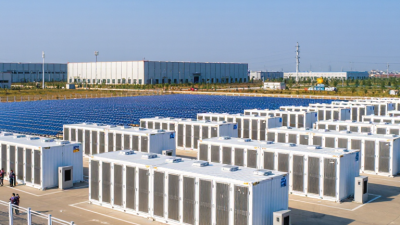
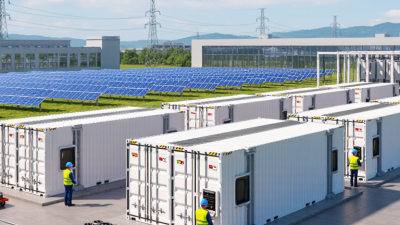
Global demand for Bess Solar systems is moving from pilot projects toward critical energy infrastructure. The International Energy Agency reported that battery storage additions in the power sector nearly doubled in 2023, reaching almost 42 GW worldwide. Its 2024 Batteries and Secure Energy Transitions report also identifies rapid deployment as essential for integrating more solar and wind power.
The market is expanding quickly. Quality is harder to judge.
For global buyers, the leading Bess Solar manufacturers are not selected by name recognition alone. Their products should show credible cycle-life testing, documented thermal-management performance, bankable warranties, and proven project records. BloombergNEF’s annual battery surveys continue to emphasize manufacturing scale, cell quality, safety, and supply-chain resilience. These factors matter when a container operates under intense heat, dust, and repeated daily cycling.
Dr. Imre Gyuk, a recognized energy-storage expert and former director of the U.S. Department of Energy’s Energy Storage Program, stated, “Energy storage is the key to unlocking the full potential of renewable energy.” His observation remains practical, not merely theoretical. A solar farm without dependable storage may still curtail power during midday peaks.
This guide compares manufacturers through an evidence-based lens. It considers battery chemistry, system integration, certifications, monitoring software, after-sales support, and regional service capacity. It also recognizes an uncomfortable limitation: published specifications do not always predict field performance. Independent testing and references from operating projects remain valuable. Buyers should verify every warranty condition, response-time commitment, and degradation assumption before signing a long-term contract. (Sources: IEA, Batteries and Secure Energy Transitions, 2024; BloombergNEF, Lithium-Ion Battery Price Survey, 2023.)
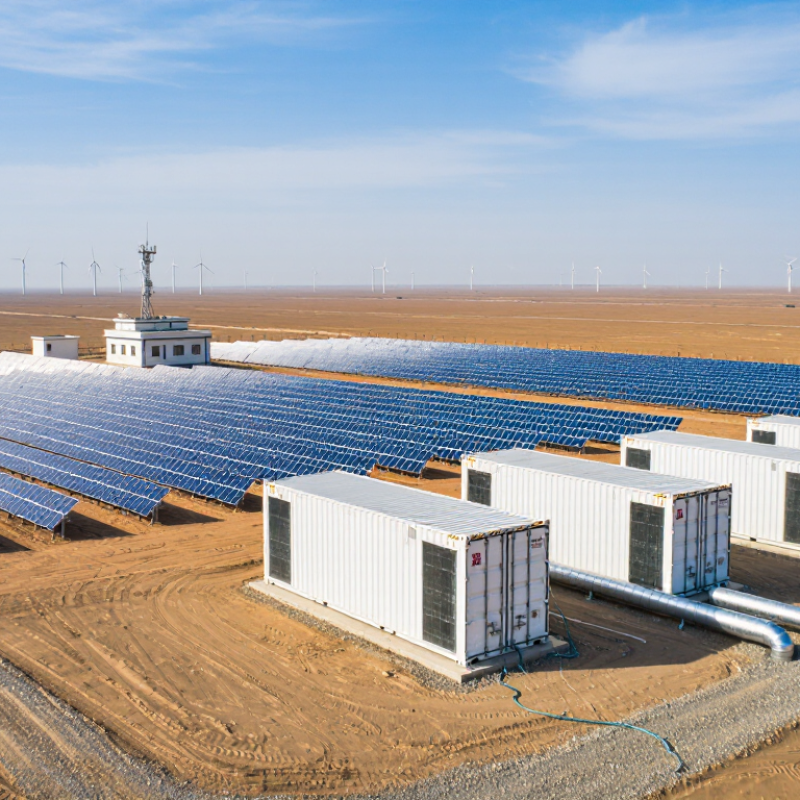
Top BESS Solar Battery Manufacturers for Global Buyers
What BESS Solar Batteries Are and Why They Matter
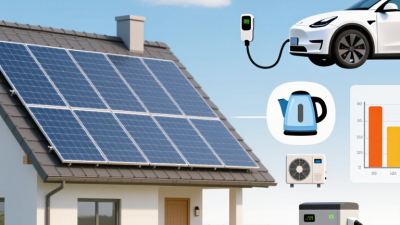
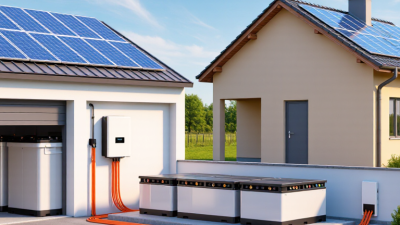
BESS solar batteries store electricity from photovoltaic systems for later use. A battery energy storage system includes cells, inverters, thermal controls, software, and safety equipment. It can shift midday solar power into evening demand, reduce grid imports, and support backup operations. That distinction matters. A battery is only one part of the system.
The International Energy Agency reports that global energy storage capacity must increase sixfold by 2030 under its net-zero pathway. Batteries will provide most of that growth. BloombergNEF reported that average lithium-ion battery pack prices fell to 115 US dollars per kilowatt-hour in 2024. Lower prices improve project economics, but they do not remove design risks. Capacity, cycle life, warranty limits, and round-trip efficiency still require close inspection.
In field projects, heat, dust, weak communication networks, and uneven solar production can reduce expected performance. A neat spreadsheet can still mislead. Buyers should request measured efficiency, degradation assumptions, emergency procedures, and independent test evidence. The National Renewable Energy Laboratory commonly models utility-scale systems near 85% round-trip efficiency, though actual results vary by climate and operating strategy. Safety standards, ventilation, monitoring, and installation quality matter as much as advertised capacity. Sometimes, a smaller system with accurate controls performs better than a larger one. That is easy to overlook.
| Evaluation Dimension | Typical BESS Data or Range | Why It Matters to Global Buyers | Recommended Buying Consideration |
|---|---|---|---|
| Core Function | Stores electricity generated by solar or the grid and releases it when required. | Improves energy availability and reduces dependence on grid power during expensive or unreliable periods. | Confirm whether the system supports solar self-consumption, backup power, peak shaving, or grid services. |
| Most Common Battery Chemistry | Lithium iron phosphate (LFP) is widely used in modern stationary BESS projects. | LFP offers strong thermal stability, good cycle performance, and no cobalt or nickel in the cathode. | Request verified chemistry documentation, safety testing, and cell traceability. |
| Usable Energy Capacity | Residential systems commonly range from about 5 to 30 kWh; commercial and utility systems can reach multiple megawatt-hours. | Capacity determines how long the battery can supply loads or shift solar generation. | Compare usable energy, not only nominal capacity, and check the specified depth of discharge. |
| Typical Duration | Approximately 1–4 hours for many solar-plus-storage applications; longer-duration systems are also available. | Duration affects backup coverage, renewable energy shifting, and project economics. | Select duration according to load profile, solar output, tariff structure, and required backup time. |
| Round-Trip Efficiency | Typically about 85%–95% at system level, depending on battery, inverter, controls, and operating conditions. | Higher efficiency reduces energy losses and improves the value of stored solar electricity. | Ensure the quoted efficiency clearly states whether it is measured at battery, inverter, or complete-system level. |
| Cycle Life | Many LFP products are specified for approximately 4,000–8,000 or more equivalent full cycles under defined test conditions. | Cycle life influences replacement frequency, lifetime energy throughput, and total cost of ownership. | Review cycle-life conditions, end-of-life capacity, temperature, charge rate, and warranty limits. |
| Depth of Discharge | Common specifications range from 80% to 100%, depending on the product and warranty terms. | A higher usable depth of discharge can provide more energy from the same nominal battery size. | Use the warranted usable capacity rather than the maximum theoretical discharge value. |
| Power Rating | Systems range from several kilowatts for homes to megawatts for commercial and utility applications. | Power rating determines which loads can operate simultaneously and how quickly energy can be delivered. | Check continuous power, peak power, overload duration, and motor-starting capability. |
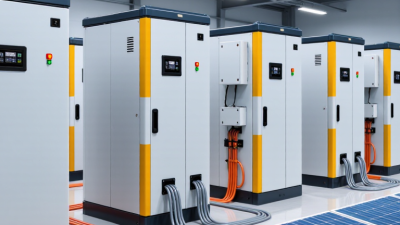
| Thermal Management | Air cooling is common in smaller systems; liquid cooling is often used for larger, high-density installations. | Effective thermal control supports safety, performance, and battery life across changing climates. | Evaluate operation in the intended ambient temperature, cooling energy use, maintenance, and noise level. |
| Safety Architecture | Battery management system, temperature sensors, contactors, fuses, alarms, and thermal-event protection are standard safety elements. | Layered protection helps detect abnormal voltage, temperature, current, and insulation conditions. | Request applicable test reports and certifications, such as IEC 62619, UL 9540, or UL 9540A where relevant to the market. |
| Ingress Protection | Outdoor enclosures are commonly specified around IP54 to IP66, depending on design and application. | Protection against dust and water is essential for outdoor installations and harsh environments. | Match the enclosure rating to humidity, dust, rain, salt exposure, flooding risk, and installation location. |
| Operating Temperature | Many systems are designed for approximately −20°C to 50°C, with derating or heating required at temperature extremes. | Climate directly affects available power, charging limits, efficiency, and service life. | Verify performance guarantees for the actual site climate rather than relying only on a general temperature range. |
| Control and Communication | Common interfaces include CAN, RS485, Ethernet, Modbus TCP, and cloud-based monitoring platforms. | Interoperability enables coordination with inverters, energy-management systems, meters, and utility platforms. | Confirm protocol compatibility, cybersecurity controls, remote access rules, and data ownership. |
| Grid Compatibility | Grid-connected systems may support peak shaving, time-of-use energy shifting, demand response, and frequency regulation. | Compatible grid functions can create additional savings or revenue streams. | Check local interconnection rules, inverter certifications, export limits, and utility approval requirements. |
| Scalability | Modular systems can often expand by adding battery packs, cabinets, inverters, or containers within design limits. | Scalability allows buyers to match storage capacity with future load growth or renewable expansion. | Confirm maximum parallel units, expansion timing, compatibility between battery generations, and software limits. |
| Warranty and Service | Typical warranties may cover a fixed period or energy throughput and often specify retained capacity at the end of the term. | Warranty structure affects financial risk, expected lifetime, and long-term system availability. | Compare warranty duration, throughput limits, response times, spare-parts availability, and local technical support. |
Note: Values are typical industry ranges for stationary battery energy storage systems. Actual specifications vary by system design, operating conditions, certification requirements, and warranty terms.